
Blog, Destiny Reading Guide, Five Elements Guide, Gift & Lifestyle
Destiny Reading vs Fortune Telling: What Is the Difference in Cultural Services?
Destiny Reading · Fortune Telling · Bazi · Cultural Services
Destiny Reading vs Fortune Telling: What Is the Difference in Cultural Services?
A responsible guide to understanding how traditional Chinese destiny reading differs from general fortune telling in purpose, method, cultural context, information, expectations, ethics, and practical use.
Destiny Reading vs Fortune Telling: The Difference in One Sentence
Destiny reading is best understood as a structured cultural interpretation used to explore symbolic patterns, personal tendencies, timing themes, and areas for reflection; fortune telling is a broad popular term that often suggests predicting specific future events or giving direct answers about what will happen.
The distinction is not absolute because “fortune telling” can describe many traditions, methods, and levels of seriousness. Some people use the term casually for any divination-related practice. Others use it specifically for short predictions about love, money, marriage, travel, or luck. By contrast, a responsible Chinese destiny reading usually emphasizes interpretation rather than certainty. It may use Bazi, the Four Pillars, the Five Elements, birth information, calendar relationships, and traditional symbolic language to help a client examine recurring patterns and practical questions.
The most important difference is expectation. Fortune telling is often approached with the question, “Tell me exactly what will happen.” Destiny reading is more useful when approached with the question, “What patterns should I understand, and how can I respond more thoughtfully?”
At Yiling Taiyi Shan, the Personalized Reading service is presented as culturally based guidance, personal reflection, and practical interpretation rather than guaranteed prediction. Readers who want more educational context can also explore the Destiny Reading Guide.
Why Are Destiny Reading and Fortune Telling Often Confused?
The two terms are confused because they occupy overlapping cultural territory. Both may involve birth dates, calendars, symbols, questions about timing, traditional systems, and discussion of future possibilities. A client may ask about career, relationships, wealth, family, or a major transition in either type of service.
Translation also creates confusion. Chinese cultural terms do not always map neatly into one English phrase. “Destiny reading,” “fate analysis,” “life reading,” “Bazi reading,” “Four Pillars reading,” “Chinese astrology,” and “fortune telling” may be used differently by different websites. Some English-language audiences use “fortune telling” because it is familiar, even when the underlying service is more analytical and structured.
Marketing language can make the problem worse. When a service promises certainty, guaranteed wealth, a fixed marriage date, unavoidable danger, or complete control over luck, it encourages customers to treat symbolic interpretation as factual prediction. A responsible provider should avoid this approach. Cultural systems can offer themes, metaphors, timing awareness, and self-reflection, but they cannot remove uncertainty from life.
It is therefore more useful to compare services by what they actually do than by the label alone. Ask what information is used, how the interpretation is prepared, whether limitations are explained, whether the client remains responsible for decisions, and whether the provider avoids fear-based claims.
What Is Destiny Reading?
Destiny reading is a broad term for culturally rooted interpretation systems that explore life patterns, personal tendencies, timing, strengths, challenges, and symbolic relationships. In a Chinese context, the service may draw on Bazi, the Four Pillars, the Five Elements, the Chinese calendar, zodiac symbolism, or related traditional frameworks.
A destiny reading does not have to be religious. Some clients approach it as cultural heritage. Others use it as a structured form of self-reflection. Some are interested in traditional philosophy, while others simply want help organizing a difficult life question. The same reading may be understood differently depending on the client’s beliefs.
A responsible reading should not declare that a person has no freedom. It may describe tendencies, but tendencies are not commands. It may identify a period that appears symbolically active or demanding, but timing language should not become a promise. It may discuss strengths and pressure points, but it should not diagnose a medical or psychological condition.
The value of destiny reading lies in interpretation. A client may recognize that they repeatedly rush decisions, avoid conflict, overwork, hesitate during transitions, or remain in environments that do not fit their working style. Traditional symbolic categories can give language to these patterns. The reading becomes useful when the client converts that language into practical reflection and action.
Personal Tendencies
A reading may explore preferred working rhythm, communication style, decision habits, response to pressure, and the balance between action and reflection.
Life Themes
Common themes include career direction, relationships, family responsibility, financial habits, visibility, learning, stability, and transition.
Timing Awareness
Traditional calendar relationships may be used to identify periods for greater attention, preparation, patience, or action without guaranteeing events.
Practical Reflection
The goal is to help the client ask better questions, recognize patterns, and make grounded decisions using real-world information.
What Is Fortune Telling?
Fortune telling is a general English term for practices intended to reveal information about the future, hidden circumstances, luck, or likely outcomes. The term can refer to many unrelated methods, including card reading, palmistry, astrology, lots, numerology, dream interpretation, oracle systems, and informal prediction traditions.
Because the term is so broad, not every fortune-telling service is the same. Some practitioners use the experience as symbolic counseling and openly acknowledge uncertainty. Others offer short entertainment-style readings. At the more problematic end, some make frightening claims, demand repeated payment, promise guaranteed outcomes, or tell clients to ignore professional advice.
The popular image of fortune telling usually focuses on direct prediction: Will I marry this person? When will I become wealthy? Will I receive a job offer? Is someone working against me? A provider may answer with a date, yes-or-no conclusion, or dramatic statement. This style can feel satisfying because it reduces ambiguity, but it can also create dependency or false confidence.
The phrase itself is not automatically negative. It can be a useful search term and a familiar way for beginners to find cultural services. The problem is not the word alone; the problem is the promise. A trustworthy service should explain what its method can reasonably offer and should avoid presenting symbolic interpretation as verified fact.
Cultural and Historical Context
Across many societies, people have used calendars, stars, numbers, natural signs, ritual objects, and inherited systems to think about uncertainty. These practices developed in different historical environments and should not be treated as one universal tradition.
In Chinese culture, systems connected with calendars, yin and yang, the Five Elements, heavenly stems, earthly branches, zodiac cycles, and time selection developed into complex bodies of knowledge. Bazi is one of the best-known frameworks used in contemporary personal readings. It is often translated as the Eight Characters because the birth year, month, day, and hour are represented through pairs of traditional calendar signs.
Modern clients encounter these traditions through websites, written reports, video consultations, cultural education, and symbolic products. This creates both opportunity and responsibility. Translation can make traditional ideas more accessible, but simplified marketing can strip away context. A reputable service should explain the cultural framework without suggesting that symbolic language is scientifically proven or capable of controlling life outcomes.
Readers interested in related symbolism can explore the Five Elements Guide, which connects Wood, Fire, Earth, Metal, and Water with cultural interpretation and symbolic accessories.
How Does Bazi Reading Work?
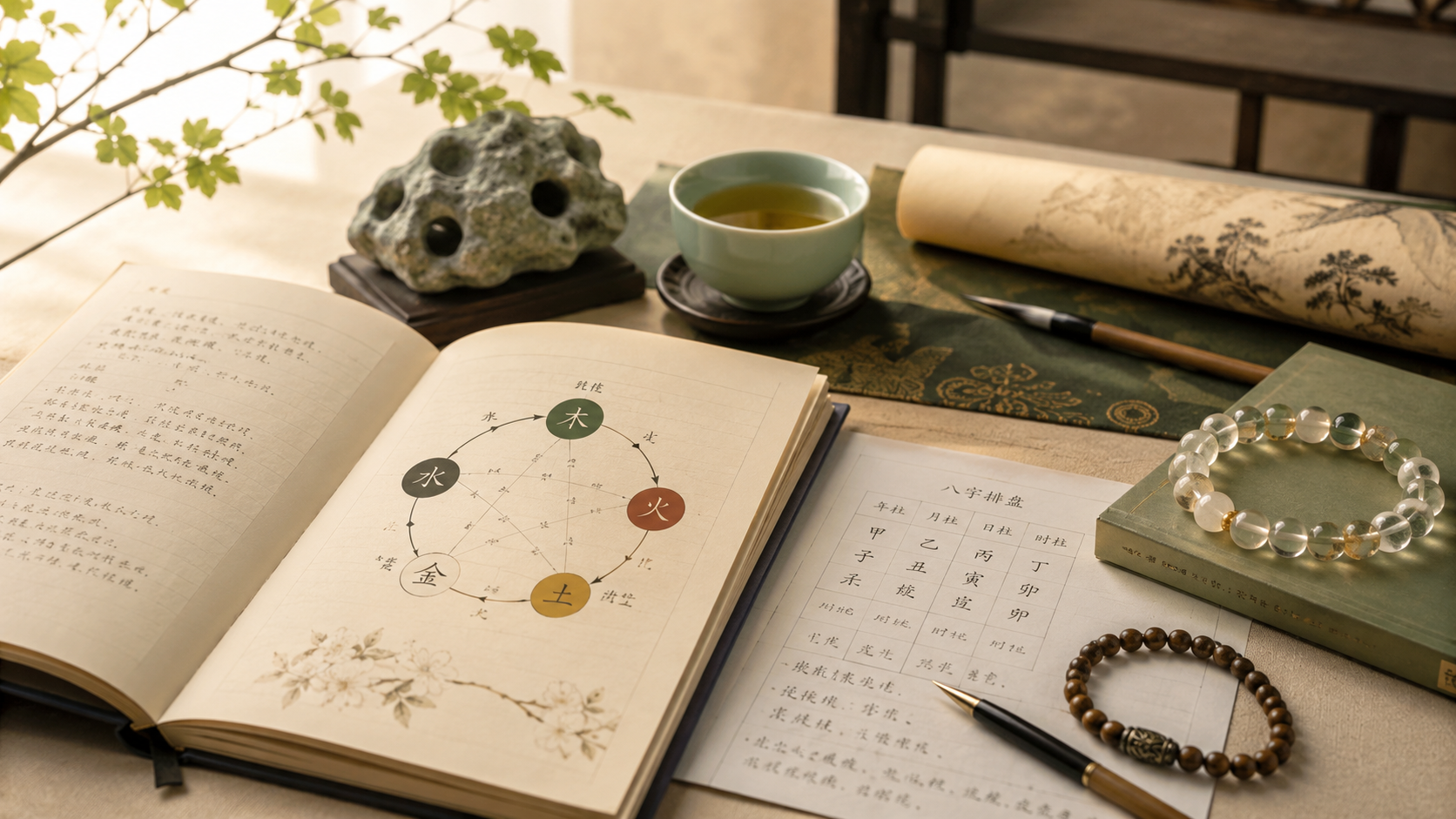
Bazi reading is a traditional Chinese interpretation system based primarily on birth year, month, day, and hour. These four time units are known as the Four Pillars. Each pillar is represented by two characters, producing the Eight Characters associated with the name Bazi.
A practitioner may examine relationships among the pillars, elemental patterns, seasonal context, symbolic roles, cycles, and other traditional structures. The analysis can become technically detailed, but a client does not need to know the terminology before ordering a reading. What matters is whether the provider can translate the framework into clear, responsible, and practical language.
Birth Information
A reading commonly asks for date of birth, time of birth if known, place or time-zone context when relevant, and the client’s main question. Accurate information helps avoid false precision. If the birth time is unknown, the provider should state that limitation instead of pretending that the chart is complete.
Interpretation Rather Than Verdict
The chart is not a court judgment. A responsible practitioner may describe patterns such as strong initiative, preference for structure, sensitivity to conflict, difficulty with boundaries, tendency toward over-analysis, or need for a more sustainable rhythm. The client should compare these themes with lived experience.
Timing as Context
Bazi may include cycles and timing themes. These are better framed as periods for awareness than as guaranteed events. A reading might suggest that a client prepare more carefully, avoid impulsive commitments, improve communication, or focus on learning. It should not claim certainty about income, marriage, illness, legal outcomes, or investment returns.
For a practical example of responsible positioning, read Bazi Reading for Career Reflection: A Cultural Guide, Not a Guaranteed Prediction.
The Role of the Five Elements in Destiny Reading
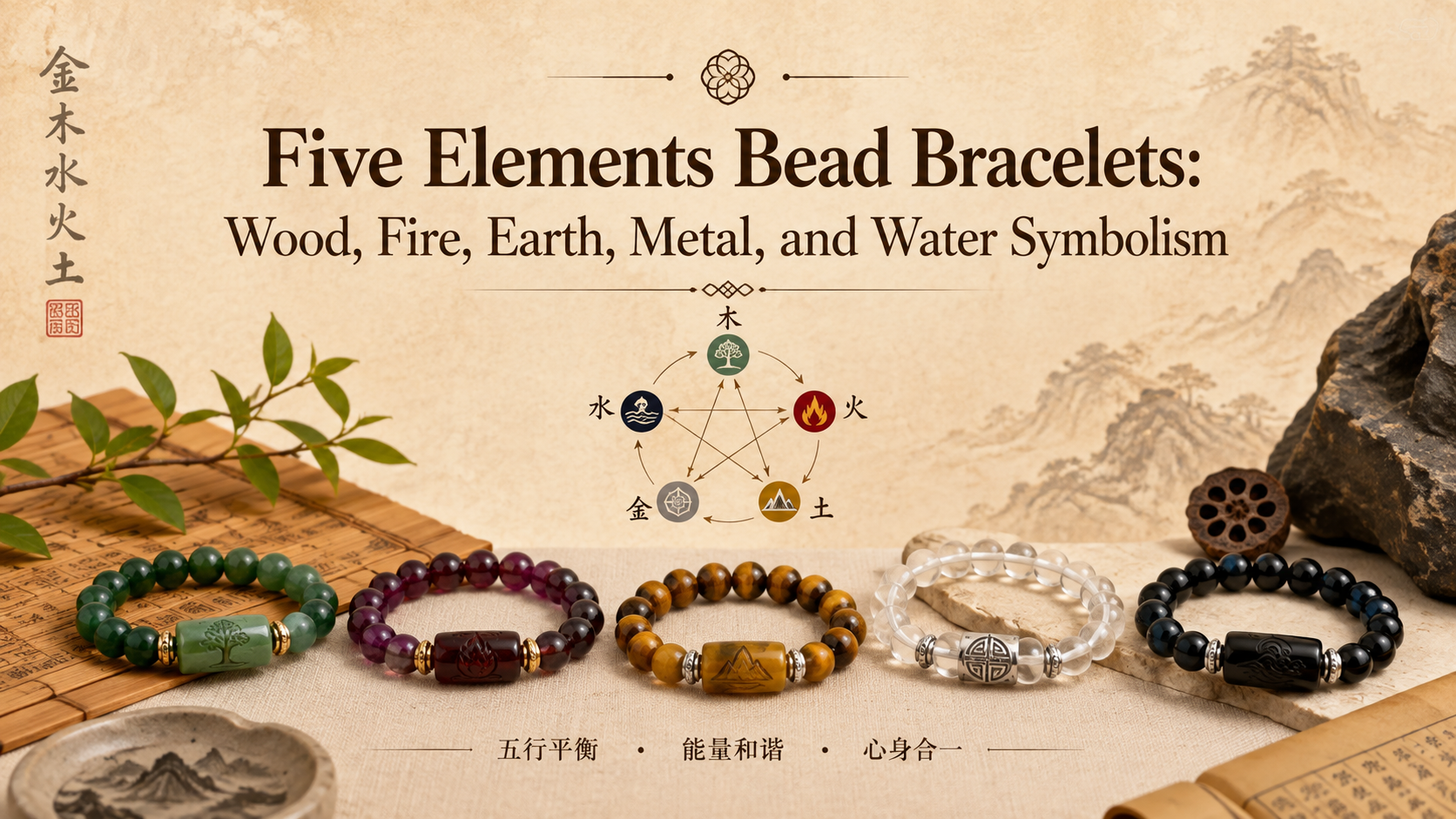
The Five Elements—Wood, Fire, Earth, Metal, and Water—are symbolic categories used in many areas of traditional Chinese thought. They are not merely physical substances. They describe qualities, movement, relationships, seasonal patterns, and forms of change.
| Element | Common Symbolic Themes | Reflective Questions |
|---|---|---|
| Wood | Growth, planning, development, flexibility, renewal | Where do I need to grow? Am I planning without acting, or acting without direction? |
| Fire | Expression, visibility, warmth, movement, confidence | Do I communicate clearly? Am I visible enough, or am I exhausting myself through constant intensity? |
| Earth | Stability, responsibility, support, routine, grounding | Are my routines sustainable? Do I support others without neglecting myself? |
| Metal | Structure, clarity, discipline, standards, refinement | What needs to be simplified? Are my standards helpful or overly rigid? |
| Water | Reflection, adaptability, depth, strategy, flow | Am I listening and adapting? Have I reflected long enough, or am I avoiding action? |
In destiny reading, elemental language can help organize complex experiences. No element is automatically lucky or unlucky. Each quality can be useful in one context and excessive in another. Growth without structure may become scattered. Structure without flexibility may become rigid. Visibility without rest may become burnout. Reflection without action may become avoidance.
This balanced interpretation is very different from saying, “You lack one element, so one product will fix your life.” A bracelet, crystal tree, incense bead strand, or other symbolic object may represent a personal theme, but it cannot repair a chart or guarantee results. Readers interested in accessories can explore Five Elements Bead Bracelets or browse the Shop.
Destiny Reading vs Fortune Telling: Detailed Comparison
| Area | Destiny Reading | Fortune Telling |
|---|---|---|
| Primary purpose | Interpret patterns, tendencies, timing themes, and questions for reflection. | Often seeks direct answers or predictions about future events and luck. |
| Common methods | Bazi, Four Pillars, Five Elements, calendar relationships, zodiac symbolism. | Broad category that may include cards, palms, lots, astrology, numerology, or oracles. |
| Information required | May require birth date, birth time, location context, and a focused question. | May require a question only, physical presence, cards, a palm, numbers, or other method-specific input. |
| Typical output | Structured report, discussion of tendencies, timing awareness, strengths, challenges, and practical reflection. | May provide yes-or-no answers, future claims, lucky dates, warnings, or short symbolic messages. |
| Client role | Client remains responsible for interpretation, decisions, and practical action. | In prediction-focused services, the client may be encouraged to wait for or obey a forecast. |
| Healthy expectation | Use the reading as a cultural mirror and decision-support reflection. | Use only as symbolic or entertainment content unless limitations are clearly explained. |
| Main ethical risk | False precision, deterministic language, misuse of sensitive birth information. | Fear-based prediction, dependency, repeated payment pressure, guaranteed claims. |
| Professional boundary | Should not replace medical, legal, financial, psychological, career, or safety advice. | The same boundary applies, especially when direct predictions concern serious decisions. |
This table describes common tendencies rather than universal rules. A service called “fortune telling” may still be careful and reflective. A service called “destiny reading” may still make irresponsible claims. Evaluate the provider’s actual language, method, boundaries, and behavior.
Why Do Modern Cultural Services Prefer the Term “Destiny Reading”?
Many responsible providers prefer “destiny reading,” “Bazi reading,” “cultural interpretation,” or “personal reflection report” because these terms better describe a structured service. They also help separate cultural analysis from the popular image of dramatic prediction.
The word “destiny” still needs careful explanation. It can sound fixed, but traditional interpretation does not have to remove personal agency. A modern provider can explain destiny as the conditions, tendencies, timing, and inherited patterns that form part of a person’s context. Choice, learning, relationships, environment, opportunity, health, economics, and effort still matter.
Using clearer terminology also improves customer trust. Clients can understand what they will receive: a written summary, a structured consultation, a discussion of career or relationship themes, a Five Elements interpretation, or practical questions for reflection. Clear scope is better than mystery.
For SEO, the phrase “fortune telling” remains useful because many people search with that wording. A compliant article can answer the search while educating the reader about responsible cultural services. The phrase can appear in titles and comparisons without turning the service into a guaranteed prediction product.
What a Responsible Destiny Reading Can and Cannot Do
It Can Support Reflection
It can help you examine repeated patterns, clarify a main concern, identify tensions between different priorities, and notice where more preparation may be useful.
It Can Provide Cultural Context
It can explain Bazi, the Four Pillars, the Five Elements, calendar symbolism, and traditional ways of discussing change.
It Cannot Guarantee the Future
It cannot promise marriage, promotion, wealth, investment returns, recovery, legal victory, safety, or any specific event.
It Cannot Replace Professionals
It is not medical diagnosis, therapy, financial planning, legal advice, career counseling, tax advice, immigration advice, or emergency support.
A useful reading should leave the client with better questions, not dependence. It should increase responsibility rather than reduce it. If the client is considering a job change, the reading may help them reflect on timing and working style, but they still need to review compensation, contracts, market conditions, skills, family obligations, and financial risk.
If the client is concerned about a relationship, symbolic interpretation may help them reflect on communication or expectations, but it cannot determine another person’s thoughts or replace honest conversation, counseling, legal support, or safety planning.
Explore a Structured Cultural Reading
Use a personalized reading to reflect on career direction, relationships, timing themes, personal tendencies, and Five Elements symbolism—without treating the service as a guaranteed prediction.
Start Personalized Reading Read Destiny Reading GuidesHow to Choose a Responsible Cultural Reading Service
A provider’s ethics matter more than an impressive title. Before ordering, review the service page, policies, sample language, information requirements, delivery method, and refund terms. Look for clarity rather than dramatic authority.
Responsible Service Checklist
- The provider explains the cultural method and what the service includes.
- The provider states that outcomes are not guaranteed.
- The provider does not diagnose illness or tell clients to stop professional treatment.
- The provider does not promise wealth, marriage, legal success, or total protection.
- The provider explains what birth information is required and how it is used.
- The provider acknowledges uncertainty when birth time or other information is missing.
- The provider avoids threats, curses, fear-based upselling, and urgent repeat payments.
- The provider offers practical language that the client can evaluate against real life.
- The website includes a disclaimer, service terms, privacy information, and cultural-respect policies.
Be cautious if a provider claims that only they can remove a danger, asks for increasing payments to prevent disaster, demands secrecy, or discourages you from consulting qualified professionals. These are not signs of cultural depth. They are signs of manipulation.
Yiling Taiyi Shan publishes a Cultural Respect Statement and a full Disclaimer to clarify the boundary between cultural symbolism and guaranteed real-world effects.
How to Prepare for a Destiny Reading
Preparation improves the quality of a reflective service. Begin with accurate basic information and one clear concern. A long list of unrelated questions can produce a scattered report.
Prepare Your Birth Information
You may be asked for your name, date of birth, time of birth if known, birthplace or time-zone context, and gender or other chart-related information depending on the method. If any detail is uncertain, say so. Honest uncertainty is better than invented accuracy.
Write One Main Question
Useful questions are open enough for reflection but focused enough to guide the analysis. Examples include:
- What work patterns should I understand before changing careers?
- Why do I repeat the same communication problem in relationships?
- What qualities should I strengthen during this transition?
- How can I approach the next year with better preparation and realistic priorities?
- Which Five Elements themes may help me describe my current tendencies?
Bring Real-World Context
Explain whether you are considering a job offer, moving, studying, starting a business, ending a relationship, or managing family responsibility. Symbolic interpretation is more useful when connected to real circumstances.
Set a Responsible Expectation
Do not expect the reader to make the decision for you. Expect a cultural framework, observations, questions, and possible themes. You remain responsible for research, consent, contracts, finances, health care, and practical action.
How to Use the Results After the Reading
Read the result once for general understanding, then return to it later. Highlight themes that clearly match your experience and mark statements that feel uncertain. A reading should be examined, not obeyed automatically.
Translate symbolic language into observable behavior. If the reading emphasizes Metal-like structure, create a decision checklist or weekly schedule. If it emphasizes Wood-like growth, choose one skill-development goal. If it emphasizes Fire-like visibility, improve communication or presentation. If it emphasizes Earth-like stability, review routines and boundaries. If it emphasizes Water-like reflection, create time for research before acting.
Combine the reading with appropriate professional tools. Career questions may require industry research, mentors, or career counseling. Financial questions require budgets, licensed advice, and risk analysis. Relationship concerns may require honest conversation, counseling, or legal and safety support. Health concerns require qualified medical professionals.
Some clients choose a symbolic product after a reading. A crystal bracelet, incense bead bracelet, crystal tree, or other cultural accessory may represent a chosen intention. Its value is visual, tactile, decorative, and personal. It does not cause the predicted outcome. Browse symbolic products only after deciding what meaning and style you genuinely prefer.
Common Misunderstandings About Destiny Reading
“A Reading Tells Me Exactly What Will Happen”
A responsible reading identifies themes and possibilities. Life outcomes depend on many interacting factors, including choices, relationships, health, skills, environment, economics, opportunity, and chance.
“My Chart Decides My Career”
Bazi can offer symbolic language for working style and tendencies, but it cannot replace education, experience, labor-market research, financial needs, or personal values.
“One Missing Element Means Something Is Wrong With Me”
The Five Elements should not be reduced to a simplistic deficiency label. Traditional analysis considers relationships, context, season, strength, and movement. A client should not be frightened into buying a product to “repair” themselves.
“A Bracelet Changes Destiny”
A bracelet may symbolize clarity, growth, grounding, confidence, or another theme. It can become a meaningful reminder, but it does not guarantee a change in luck, health, wealth, love, or safety.
“Destiny Reading Is Always Religious”
Some people connect readings with spiritual or religious beliefs, while others approach them as cultural heritage, philosophy, symbolism, or personal reflection. The client’s interpretation may vary.
Cultural Respect and Ethical Boundaries
Cultural respect requires more than decorative language. A provider should explain where concepts come from, avoid presenting all Asian traditions as identical, and avoid using sacred or traditional symbols only as marketing tools.
Responsible translation should preserve nuance. “Destiny” does not have to mean helplessness. “Energy” may describe symbolic quality rather than a measurable scientific force. “Balance” may describe reflection, design, relationships, or personal intention rather than a medical claim.
Privacy is also part of respect. Birth information can be personally sensitive. A service should collect only what is needed, explain how it will be used, and protect it appropriately. Clients should avoid publicly sharing complete birth details unless they understand the privacy implications.
Finally, cultural services should not exploit vulnerability. People often seek readings during grief, fear, illness, relationship conflict, career instability, or financial pressure. This makes clear limits essential. A reading should not intensify fear or create dependency. It should encourage grounded judgment and appropriate professional support.
Compliance Statement
The information in this article about destiny reading, fortune telling, Bazi, the Four Pillars, the Five Elements, timing themes, symbolic products, and cultural interpretation is provided for educational discussion, cultural appreciation, lifestyle inspiration, and personal reflection only.
Destiny reading, Bazi interpretation, Five Elements analysis, zodiac discussion, feng shui guidance, symbolic jewelry, crystal products, incense bead products, blessing-related services, and similar cultural offerings are not intended to diagnose, treat, cure, or prevent disease. They are not substitutes for medical, psychological, legal, financial, tax, career, business, immigration, relationship, safety, or other licensed professional advice.
Terms such as destiny, luck, timing, wealth pattern, compatibility, opportunity, protection, balance, energy, success, harmony, or personal alignment refer to traditional symbolism, reflective interpretation, cultural language, and personal meaning. They do not represent guaranteed predictions, supernatural promises, scientific claims, financial returns, relationship results, career results, legal outcomes, health effects, safety guarantees, or measurable life changes.
Use any reading as general reflection and combine it with practical research, informed consent, qualified professional guidance, and personal responsibility. Outcomes are not guaranteed. Review the full Yiling Taiyi Shan Disclaimer before booking a service or purchasing a product.
Ready to Explore a Responsible Destiny Reading?
Begin with a clear question and realistic expectations. Use the service to understand cultural symbolism, personal tendencies, timing themes, and practical areas for reflection—not as a fixed verdict about your future.
View Personalized Reading Explore Five Elements Guides Browse Symbolic ProductsFrequently Asked Questions
1. What is the main difference between destiny reading and fortune telling?
Destiny reading usually emphasizes structured cultural interpretation, personal tendencies, timing themes, and reflection. Fortune telling is a broader term that often suggests direct prediction of future events or luck. Actual quality depends on the provider’s method and ethics.
2. Is Bazi reading the same as fortune telling?
Bazi can be described broadly as a divination or destiny-interpretation tradition, but a responsible modern Bazi service is more structured than popular entertainment-style fortune telling. It uses birth information, the Four Pillars, and traditional symbolic relationships to support reflection rather than guaranteed prediction.
3. Can destiny reading predict the future?
A responsible provider should not guarantee specific future events. A reading may discuss symbolic timing, tendencies, and areas for preparation, but real outcomes depend on choices, circumstances, relationships, health, economics, opportunity, and many other factors.
4. What information is needed for a Bazi reading?
A provider commonly requests your name, date of birth, time of birth if available, birthplace or time-zone context when relevant, and your main question. If the birth time is unknown, that limitation should be stated clearly.
5. What are the Four Pillars?
The Four Pillars refer to the traditional representation of birth year, month, day, and hour. Each pillar contains two calendar characters, forming the Eight Characters associated with Bazi.
6. How are the Five Elements used in a destiny reading?
Wood, Fire, Earth, Metal, and Water may be used as symbolic categories for growth, expression, stability, structure, reflection, timing, and relationships. They provide a cultural language for interpreting patterns rather than a scientific diagnosis.
7. Is destiny reading a religion?
Not necessarily. Some people connect it with spiritual or religious beliefs, while others approach it as cultural heritage, traditional philosophy, symbolic interpretation, or a structured form of self-reflection.
8. Can a destiny reading tell me which career to choose?
It may help you reflect on work style, strengths, stress patterns, structure, visibility, and timing. It should not choose a profession for you or replace career counseling, education research, salary analysis, contracts, or practical planning.
9. Can destiny reading guarantee love or marriage?
No. A reading may discuss communication patterns, relationship themes, or timing symbolism, but it cannot guarantee another person’s feelings, a marriage date, reconciliation, or relationship success.
10. What are warning signs of an irresponsible reader?
Warning signs include guaranteed results, frightening predictions, claims that only the reader can remove danger, repeated urgent payment demands, medical or legal instructions, pressure to keep the service secret, and discouragement from seeking professional help.
11. How should I use a destiny reading?
Use it as a cultural reflection tool. Compare the interpretation with lived experience, identify one or two practical themes, and combine the reading with research, informed decisions, and qualified professional advice when needed.
12. Where can I book a culturally responsible reading?
You can review the Yiling Taiyi Shan Personalized Reading page, read the service scope and compliance reminder, and decide whether the reflective approach fits your needs.
.jpg)
Pingback: Bazi Relationship Reading | Compatibility & Couple Guide