
Blog, Crystal Guide, Five Elements Guide
Five Elements Bead Bracelets: Wood, Fire, Earth, Metal, and Water Symbolism
Five Elements Guide · Wu Xing · Symbolic Bracelets
Five Elements Bead Bracelets: Wood, Fire, Earth, Metal, and Water Symbolism
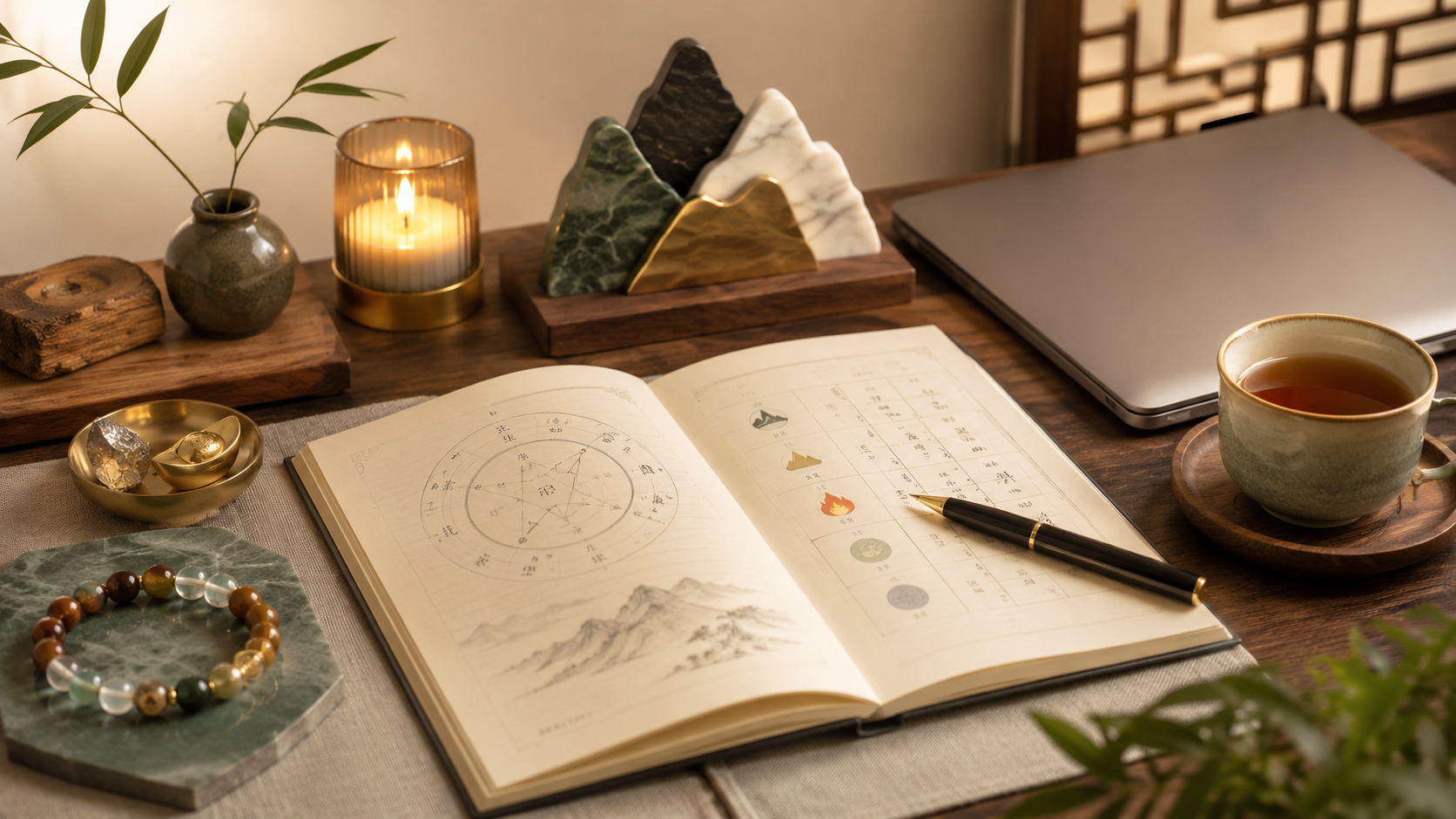
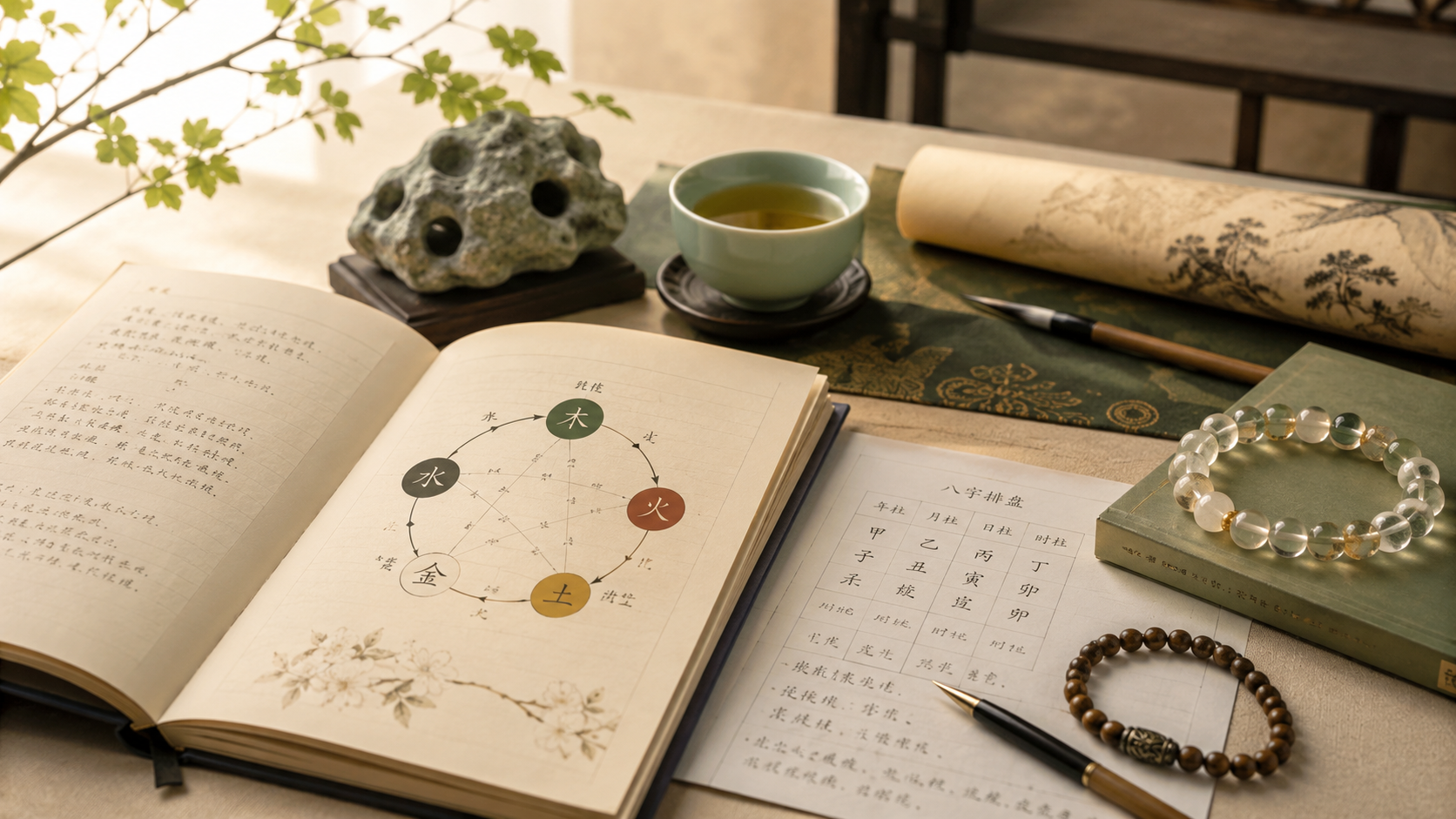
Five Elements bead bracelets bring together wearable design and one of the best-known symbolic frameworks in traditional Chinese culture: Wood, Fire, Earth, Metal, and Water. Known collectively as Wu Xing (五行), these five phases are used as a language for understanding change, relationships, seasons, colors, qualities, and patterns of balance.
When translated into bracelet design, Five Elements symbolism can appear through color, crystal selection, incense beads, natural materials, metal details, bead combinations, and personal intention. A green bracelet might evoke Wood and renewal. Red or purple may express Fire. Yellow and brown can suggest Earth. White and clear tones may represent Metal, while black or deep blue can express Water.
However, a Five Elements bracelet is most meaningful when understood within its cultural context. It should not be treated as a guaranteed method for changing fortune, health, relationships, or destiny. Instead, it can be appreciated as a symbolic cultural accessory, meaningful gift, personal reminder, or aesthetic expression of traditional Chinese ideas.
This complete guide explores Five Elements bracelet meaning, the symbolism of each element, common colors and materials, the relationships among the five phases, crystal and incense bead options, how to choose a bracelet, how Bazi may be connected with Five Elements interpretation, and how to wear or gift these bracelets responsibly.
Table of Contents
- What Are the Five Elements?
- What Is a Five Elements Bead Bracelet?
- Five Elements Colors and Materials
- Wood Element Bracelet Meaning
- Fire Element Bracelet Meaning
- Earth Element Bracelet Meaning
- Metal Element Bracelet Meaning
- Water Element Bracelet Meaning
- Generating and Controlling Cycles
- Single Element vs Five-Element Bracelets
- Crystal vs Incense Bead Bracelets
- How to Choose Your Bracelet
- Five Elements Bracelets and Bazi
- How to Wear Five Elements Bracelets
- Five Elements Bracelet Gift Guide
- Care and Daily Use
- Buying Checklist
- FAQ
- Cultural and Compliance Statement
1. What Are the Five Elements in Chinese Culture?
The Five Elements are known in Chinese as Wu Xing. Although the English word “elements” is widely used, Wu Xing can also be understood as five phases, movements, or categories of change. They are not simply five physical substances.
Wood, Fire, Earth, Metal, and Water provide a symbolic vocabulary through which traditional Chinese thought describes different qualities and relationships. Wood may suggest expansion and growth. Fire suggests warmth and outward expression. Earth suggests stability and nourishment. Metal suggests structure and refinement. Water suggests flow, depth, and adaptability.
The framework has historically appeared in many areas of Chinese intellectual and cultural life. Its interpretations can vary by school, period, and application, so there is no need to treat every modern color chart or jewelry association as an absolute rule.
For contemporary jewelry, the Five Elements provide a useful design language. Different colors, stones, scents, materials, and textures can be arranged to reflect these five symbolic themes. This makes the framework especially suitable for bracelets because beads naturally allow designers to combine or separate colors and materials.
For readers who want a broader introduction beyond bracelets, see our Five Elements Jewelry Guide.
2. What Is a Five Elements Bead Bracelet?
A Five Elements bead bracelet is a bracelet designed around the symbolism of Wood, Fire, Earth, Metal, and Water. It may contain natural stones, crystal beads, incense beads, aromatic materials, wooden beads, metal spacers, colored cords, charms, or combinations of several materials.
Some designs focus on one element. A bracelet made primarily from green stones, for example, may be presented as Wood-inspired. A black obsidian bracelet may be interpreted through Water symbolism. Other designs intentionally combine five color families so that all five phases appear in a single bracelet.
People may choose these bracelets for several reasons. Some enjoy Chinese cultural symbolism. Some want jewelry that represents a personal intention such as growth or clarity. Others are looking for a thoughtful gift whose meaning can be explained to the recipient.
If you are currently comparing styles, you can browse the full bracelet collection, including dedicated crystal bracelets and incense bead bracelets.
3. Five Elements Bracelet Colors, Meanings, and Materials
Color is one of the most accessible ways to translate Wu Xing symbolism into jewelry. The table below summarizes commonly used associations. These are cultural design associations rather than strict universal rules.
| Element | Common Symbolism | Typical Colors | Possible Bracelet Materials | Overall Style |
|---|---|---|---|---|
| Wood | Growth, renewal, flexibility, development | Green, teal, natural plant tones | Green fluorite, green aventurine, moss agate, jade-inspired stones, wooden or herbal beads | Natural, fresh, organic |
| Fire | Warmth, visibility, expression, enthusiasm | Red, purple, orange, warm pink | Red agate, garnet-toned stones, carnelian, amethyst, warm-colored aromatic beads | Expressive, vibrant, noticeable |
| Earth | Stability, support, grounding, reliability | Yellow, brown, beige, honey, ochre | Tiger eye, citrine, smoky quartz, brown agate, earthy incense beads | Warm, grounded, classic |
| Metal | Clarity, refinement, order, structure | White, silver, gold, clear, pale gray | Clear quartz, white stones, silver-tone or gold-tone spacers | Clean, polished, minimalist |
| Water | Depth, reflection, wisdom, adaptability | Black, deep blue, charcoal, smoky tones | Black obsidian, dark agate, smoky quartz, blue stones, dark aromatic beads | Quiet, strong, understated |
4. Wood Element Bracelet Meaning
Wood Symbolism: Growth, Renewal, and Development
Wood is commonly connected with spring, growth, upward movement, flexibility, renewal, and development. A tree grows by adapting to its environment while continuing to reach outward and upward, which makes Wood a natural metaphor for personal progress.
In bracelet design, Wood is frequently represented by green. Green fluorite, green aventurine, moss-like patterns, jade-inspired beads, botanical colors, natural wood, and herbal-looking incense beads can all support a Wood-inspired aesthetic.
A Wood element bracelet can be especially meaningful when someone is beginning a new chapter: starting a project, moving into a new role, studying something new, changing routines, or developing a creative idea.
Its symbolism does not mean that the bracelet itself causes growth. A more responsible interpretation is that the bracelet serves as a personal reminder of patience, adaptability, learning, and gradual development.
From a styling perspective, Wood colors pair naturally with cream, beige, brown, white, linen, denim, and other earthy or organic materials.
5. Fire Element Bracelet Meaning
Fire Symbolism: Warmth, Visibility, and Expression
Fire is often associated with brightness, warmth, movement, enthusiasm, visibility, passion, and outward expression. In seasonal symbolism it is commonly connected with summer and an expansive, active quality.
Fire-inspired bracelets frequently use red, purple, orange, or other warm colors. Red agate, garnet-colored stones, carnelian, amethyst, and warm-toned accent beads can all create an expressive bracelet design.
Someone may choose Fire symbolism when they want their bracelet to represent confidence, creativity, communication, celebration, or a willingness to be seen. This can make Fire-inspired jewelry an appealing symbolic gift for artists, speakers, entrepreneurs, performers, graduates, or anyone entering a more visible stage of life.
Because Fire colors can make a strong visual statement, they often work particularly well with simple neutral clothing. A single red or purple bracelet can provide a clear accent without overwhelming an outfit.
Fire symbolism should be communicated as a cultural metaphor rather than a promise of charisma, success, attraction, or other guaranteed effects.
6. Earth Element Bracelet Meaning
Earth Symbolism: Stability, Support, and Grounding
Earth is commonly associated with stability, nourishment, patience, support, centeredness, and reliability. Within Five Elements symbolism, Earth carries the feeling of having a foundation from which other activities can develop.
Earth-inspired bracelets often feature yellow, beige, brown, honey, ochre, or golden-brown tones. Tiger eye and citrine are especially popular visual directions, alongside smoky quartz, brown agate, wooden beads, and warm aromatic materials.
People may choose an Earth element bracelet during periods when they value consistency, practical planning, family connection, routine, patience, or a more grounded personal style.
Earth bracelets are also among the easiest to integrate into everyday wardrobes. Brown and honey tones work with denim, leather, cream, camel, gray, navy, black, and business-casual clothing.
As a gift, an Earth-inspired design can express a simple message: “May this be a reminder of steadiness, support, and the value of building on a strong foundation.”
7. Metal Element Bracelet Meaning
8. Water Element Bracelet Meaning
Water Symbolism: Depth, Reflection, and Adaptability
Water is often associated with depth, quiet strength, reflection, adaptability, wisdom, and the ability to move around obstacles. Unlike an image of rigid strength, Water symbolism emphasizes flexibility.
Black, dark blue, charcoal, deep gray, and smoky tones are commonly used for Water-inspired bracelet designs. Black obsidian, black agate, smoky quartz, blue-toned stones, and dark incense beads can all create this aesthetic.
A Water element bracelet may resonate with someone who values thoughtful reflection, study, adaptability, private creativity, or a calm and minimalist style.
Water-inspired bracelets are also highly versatile. Black and deep blue designs can work with casual, professional, masculine, feminine, and gender-neutral wardrobes.
For a deeper exploration of dark crystal symbolism and appropriate cultural language, related bracelet styles can also be explored through our Crystal Guide.
9. How Wood, Fire, Earth, Metal, and Water Relate to One Another
An important part of Five Elements thinking is that the elements are not isolated. Their meaning comes partly from their relationships.
The Generating Cycle
A commonly described generating sequence is: Wood → Fire → Earth → Metal → Water → Wood. This sequence is often used symbolically to describe support, development, and transformation.
Wood supports Fire as fuel. Fire produces ash associated with Earth. Earth is traditionally understood as containing Metal. Metal is symbolically linked with the generation or collection of Water, while Water nourishes Wood.
The Controlling Cycle
A second relationship describes regulation: Wood → Earth → Water → Fire → Metal → Wood. Rather than seeing this only as conflict, it can be understood as a symbolic model of restraint and balance.
These cycles are one reason a bracelet containing all five elements can represent something more complex than simply “five lucky colors.” The Five Elements are traditionally understood as an interacting system.
10. Single-Element Bracelet vs Balanced Five Elements Bracelet
Choose a Single Element for a Focused Theme
A single-element design has a clear symbolic direction. Wood can represent development. Fire can represent expression. Earth can represent stability. Metal can represent clarity. Water can represent reflection.
Single-element bracelets also tend to be visually easier to coordinate because they stay within a limited color family.
Choose All Five Elements for a Broader Symbol
A Five Elements bracelet combining green, red, yellow or brown, white or clear, and black or blue can symbolize completeness and the relationship among different qualities.
This is particularly suitable when you want a cultural gift but do not want to assign a single element to the recipient.
For a more detailed decision process, read How to Choose a Bracelet Based on the Five Elements in Chinese Culture.
11. Five Elements Crystal Bracelets vs Incense Bead Bracelets
Five Elements symbolism can be expressed through both crystals and incense beads, but the experience is different.
| Feature | Crystal Bracelet | Incense Bead Bracelet |
|---|---|---|
| Primary appeal | Gemstone color, transparency, texture, jewelry aesthetics | Aromatic character, texture, traditional scent culture |
| Five Elements expression | Mostly through stone color and design | Through color, aromatic profile, materials, and cultural styling |
| Visual style | Bright, polished, decorative | Quiet, matte, natural, traditional |
| Care | Depends on mineral and construction | Usually requires greater protection from water and chemicals |
| Gift appeal | Easy for jewelry buyers to understand | Distinctive for people interested in fragrance and Chinese cultural aesthetics |
Crystal beads are especially useful when color is central to the Five Elements design. A single bracelet can clearly display green, red, yellow, clear, and black beads.
Incense beads offer a different sensory experience. The material, scent, texture, and traditional aesthetic can become part of the symbolic interpretation. To understand this category in more depth, read What Are Incense Bead Bracelets? Meaning, Materials, and Cultural Background.
Explore Five Elements-Inspired Bracelet Styles
Compare crystal bracelets, incense bead bracelets, natural materials, and symbolic designs inspired by Wood, Fire, Earth, Metal, and Water.
Shop Bracelets Crystal Bracelets Incense Bead Bracelets12. How to Choose a Five Elements Bead Bracelet
There is no single bracelet that is objectively “best” for everyone. A useful selection method considers symbolism, personal style, materials, comfort, and the context in which the bracelet will be worn.
Choose by Personal Intention
Begin by asking what you want the bracelet to represent. If you are entering a new stage, Wood may provide a meaningful metaphor for development. Fire can represent expression and confidence. Earth can symbolize stability. Metal may reflect structure and clarity. Water can represent adaptability and reflection.
Choose by Color
If symbolism feels too abstract, start with the colors you naturally wear. Someone with a neutral wardrobe may find Earth, Metal, or Water bracelets easier to use every day. Someone who enjoys vivid accessories may prefer Wood or Fire colors.
Choose by Material
Consider whether you prefer polished crystals, matte beads, aromatic incense materials, wood, mixed materials, or metal details. The tactile experience matters because a bracelet is something you may wear for many hours.
Choose by Lifestyle
A bracelet for office use may need to be subtle and easy to coordinate. A gift or ceremonial-style accessory may allow more color and larger beads. If you work frequently with water, chemicals, machinery, or equipment, consider whether wearing any bracelet is appropriate during those activities.
Choose by Cultural Interpretation
Some people want a more individualized symbolic framework rather than choosing only by color. In that case, Five Elements or Bazi-related cultural interpretation may provide additional context.
You can also read From Bazi to Bracelet: A Cultural Guide to Choosing Symbolic Accessories for a deeper explanation of this approach.
13. What Is the Connection Between Five Elements Bracelets and Bazi?
Bazi is a traditional Chinese interpretive framework that uses birth information to organize symbolic relationships, including patterns involving the Five Elements.
Because both systems use the language of Wood, Fire, Earth, Metal, and Water, some people choose symbolic jewelry after receiving a Bazi or Five Elements interpretation.
This does not mean that everyone with the same birth year should wear the same stone, nor should a bracelet be selected through a simplistic formula such as “you lack Water, therefore you must wear black.”
Traditional interpretation is more nuanced than counting colors or elements in isolation. Context and relationships matter.
For educational background, see How a Five Elements Reading Can Help You Understand Personal Tendencies. For users seeking individualized cultural reflection, the Personalized Reading section explains available options.
14. How to Wear Five Elements Bead Bracelets
There is no universal rule requiring a Five Elements bracelet to be worn on a particular wrist. Modern customers often choose according to comfort, dominant-hand activity, watch placement, bracelet construction, and personal preference.
For Minimalist Daily Wear
Choose one element or one dominant color. Clear quartz, black obsidian-style designs, tiger eye, or subtle green stones can work easily with everyday outfits.
For Layered Bracelet Styling
If wearing multiple bracelets, vary bead scale and texture rather than simply stacking many identical strands. One crystal bracelet can be combined with a quieter incense bead bracelet, for example.
For Professional Settings
Earth, Metal, and Water color palettes are usually the easiest to coordinate with workwear because brown, clear, black, white, gray, and navy tones are visually restrained.
For Cultural or Expressive Styling
A complete five-color design can act as the focal point of the outfit. Pair it with neutral clothing so the bracelet remains visually balanced.
15. Five Elements Bracelet Gift Guide
The combination of wearable design and explainable symbolism makes Five Elements bracelets suitable for birthdays, graduations, friendship gifts, professional milestones, holidays, new beginnings, and personal celebrations.
For someone starting a new stage, Wood symbolism can communicate growth. Fire may suit a creative or expressive recipient. Earth can represent dependable support. Metal can be chosen for someone who appreciates minimalism and structure. Water may suit someone who values reflection and understated design.
If you do not know which element fits the recipient, a balanced Five Elements bracelet is usually easier to present because the symbolism includes all five phases rather than making assumptions about the person’s birth chart or life.
A suitable gift message might read: “Chosen as a symbolic reminder of growth, clarity, stability, adaptability, and the value of balance.”
For more gift-selection ideas, see Meaningful Spiritual Gifts: How to Choose by Birth Date, Intention, and Symbolism.
16. How to Care for Five Elements Bead Bracelets
Care depends on the actual materials rather than the symbolic element. A Water-themed bracelet, for example, is not automatically safe to immerse in water simply because its symbolism is associated with Water.
- Remove bracelets before swimming, showering, bathing, or sauna use unless the individual product instructions specifically state otherwise.
- Avoid prolonged contact with perfume, alcohol, cosmetics, detergents, and cleaning chemicals.
- Do not soak incense beads or aromatic composite beads.
- Store crystal bracelets separately when possible to reduce scratching and impact damage.
- Avoid repeatedly stretching elastic bracelets beyond the minimum needed to put them on.
- Wipe suitable beads gently with a soft dry cloth after wear.
- Check cords, clasps, spacers, and elastic periodically for wear.
- Stop wearing a bracelet if damaged components create sharp edges or other safety concerns.
Natural materials may display differences in color, inclusions, texture, grain, scent, or surface pattern. These variations may be normal characteristics of the material rather than defects.
Before use, review our Cultural Product Use & Safety Notice for additional product guidance.
17. Five Elements Bracelet Buying Checklist
- Meaning: Are you choosing one element or all five?
- Material: Crystal, incense bead, wood, stone, metal, or mixed materials?
- Color: Will the bracelet fit your everyday wardrobe?
- Size: Check wrist circumference and bracelet specifications before ordering.
- Comfort: Consider bead diameter and weight.
- Care: Understand whether the materials are sensitive to moisture or chemicals.
- Authenticity: Read the actual material description rather than assuming every colored bead is a particular gemstone.
- Claims: Be cautious of sellers promising guaranteed wealth, healing, romantic results, or destiny changes.
- Gift suitability: Choose symbolism that can be explained respectfully without making assumptions about the recipient.
Not Sure Which Element to Choose?
You can begin with personal style and symbolic intention, or explore a personalized cultural reading for a more individualized Five Elements discussion.
Explore Personalized Reading Contact Us18. Frequently Asked Questions About Five Elements Bead Bracelets
What is a Five Elements bead bracelet?
A Five Elements bead bracelet is a symbolic accessory inspired by Wood, Fire, Earth, Metal, and Water in traditional Chinese culture. It may use crystals, incense beads, natural stones, wood, colored beads, or metal details to express one or more of the five symbolic phases.
What do the Five Elements represent?
Wood commonly represents growth and renewal, Fire expression and warmth, Earth stability and support, Metal clarity and structure, and Water depth and adaptability. These are symbolic cultural associations rather than scientifically established effects.
What colors represent Wood, Fire, Earth, Metal, and Water?
A common contemporary system uses green for Wood; red or purple for Fire; yellow, brown, and beige for Earth; white, clear, silver, or gold for Metal; and black or dark blue for Water. Exact associations can vary between contexts and traditions.
Which Five Elements bracelet should I wear?
You can choose according to symbolism, color preference, material, wardrobe, lifestyle, or a cultural interpretation. Wood may suit a growth theme, Fire expression, Earth stability, Metal clarity, and Water reflection. A five-element bracelet can be chosen when you prefer a broader symbol of balance.
Can I choose a Five Elements bracelet based on my birth date?
Some people use Bazi or Five Elements cultural interpretation when selecting symbolic jewelry. Birth information can be part of that framework, but responsible interpretation is more nuanced than choosing a color from birth year alone.
Does wearing a Five Elements bracelet change luck or destiny?
No guaranteed result should be expected. Five Elements bracelets are best understood as cultural accessories, personal symbols, meaningful gifts, or reflective reminders rather than tools that guarantee changes in fortune, destiny, wealth, health, or relationships.
Is a Five Elements crystal bracelet better than an incense bead bracelet?
Neither is universally better. Crystal bracelets emphasize gemstone color and jewelry aesthetics, while incense bead bracelets emphasize aromatic materials, texture, scent culture, and a quieter traditional aesthetic. Choose according to your material and style preference.
Can I wear all five elements together?
Yes. Many Five Elements bracelets intentionally combine colors or materials representing Wood, Fire, Earth, Metal, and Water. In cultural design, the combination may symbolize completeness, interaction, and balance.
Which Five Elements bracelet makes the best gift?
If you know the recipient’s preferred symbolic theme, choose the corresponding element. If you are uncertain, a balanced Five Elements design is often easier to gift because it avoids assigning one specific symbolic quality to the recipient.
Where can I learn more about Five Elements bracelet symbolism?
Continue with our Five Elements Bracelet Selection Guide, Five Elements Jewelry Guide, or Five Elements Guide archive.
19. Final Thoughts: Choosing a Five Elements Bracelet with Meaning
Five Elements bead bracelets are compelling because they connect cultural symbolism with something practical and personal: jewelry that can be worn in everyday life.
Wood can remind us of development and renewal. Fire reflects warmth and expression. Earth emphasizes stability and support. Metal suggests clarity and refinement. Water represents adaptability and depth.
A bracelet may focus on just one of these themes, or it may combine all five into a broader design representing the relationships among different qualities.
The most thoughtful choice is not necessarily the bracelet associated with the strongest promise. In fact, exaggerated promises can reduce both cultural credibility and customer trust. A better approach is to consider meaning, design, craftsmanship, comfort, materials, personal style, and the cultural story behind the bracelet.
Whether you select polished crystals, aromatic incense beads, natural materials, dark minimalist designs, or a colorful Five Elements combination, the bracelet can become a quiet reminder of the ideas you want to carry with you.
For more information about how we present traditional symbolism, please review our Cultural Respect Statement.
Explore Meaningful Bracelet Designs
Discover crystal bracelets, incense bead bracelets, and cultural accessories selected around natural materials, traditional symbolism, personal style, and meaningful gifting.
Browse All Bracelets Explore Crystal Bracelets20. Cultural, Symbolic, and Compliance Statement
Important Disclaimer: The information in this article is provided for cultural appreciation, education, lifestyle inspiration, product selection, and personal reflection only.
References to Wood, Fire, Earth, Metal, Water, balance, energy, grounding, clarity, protection, fortune, destiny, harmony, intention, or related concepts describe traditional cultural symbolism, historical interpretations, personal beliefs, or aesthetic themes. They should not be interpreted as scientific claims or guarantees of measurable results.
Five Elements bracelets, crystal bracelets, incense bead bracelets, beads, stones, cultural accessories, and related products are not intended to diagnose, treat, cure, mitigate, or prevent disease or medical conditions. They are not substitutes for medical, psychological, financial, legal, relationship, safety, or other qualified professional advice.
Personalized readings or Five Elements interpretations are offered for cultural interpretation, informational discussion, and personal reflection. They do not guarantee future events, financial success, relationship outcomes, health outcomes, or changes in destiny.
Individual interpretations of cultural symbolism may vary. Customers should make purchasing and life decisions using their own judgment and circumstances.
Please review our full Disclaimer, Cultural Product Use & Safety Notice, and Cultural Respect Statement for further information.
Pingback: Best Crystal Bracelets for Women | Buyer’s Guide