
Blog, Crystal Guide
What Is the Best Crystal Bracelet for Everyday Wear?
What Is the Best Crystal Bracelet for Everyday Wear?
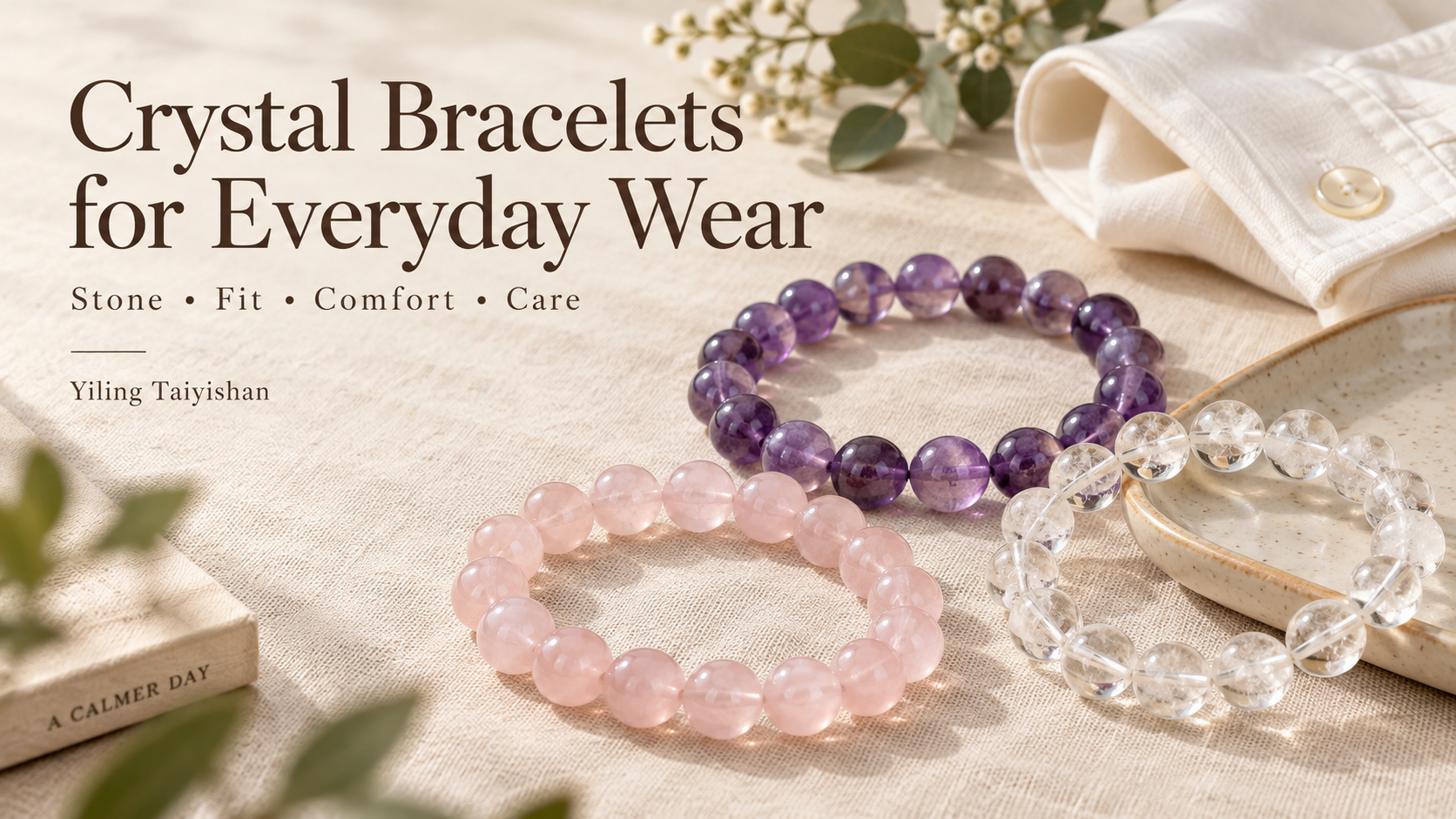
A simple, well-fitted amethyst or rose quartz bead bracelet is a practical starting choice for everyday wear, provided you remove it for activities that could damage it. Both stones have a Mohs hardness of 7, but that does not make the finished bracelet scratchproof, impact-proof, or waterproof. Choose amethyst for purple color, rose quartz for soft pink, or compare clear quartz and citrine if their appearance better suits your wardrobe. Prioritize smooth beads, comfortable proportions, secure construction, and disclosed materials over symbolic promises. The best daily bracelet is the one that fits your routine, including the care you are willing to give it.
What Should You Know at a Glance?
| Product type | Beaded gemstone jewelry for styling and personal expression. |
|---|---|
| Material shortlist | Amethyst, rose quartz, clear quartz, and citrine; identify every material in mixed designs. |
| Verified hardness | GIA lists amethyst, rose quartz, and citrine at Mohs 7. Hardness describes scratch resistance. |
| Size examples | The products compared below include approximately 6mm clear quartz base beads with larger accents, and a separate 14mm citrine design. |
| Fit | Confirm bracelet internal fit separately from bead diameter. |
| Care | Follow instructions for the complete bracelet, including cord, accents, and treatments. |
Gem properties: GIA amethyst care, GIA rose quartz care, and GIA citrine care. Product dimensions are linked in the comparison below.
What Makes a Crystal Bracelet Suitable for Everyday Wear?
A useful everyday bracelet combines a suitable stone with comfortable construction and a manageable care routine. Consider your actual day: typing, commuting, changing clothes, carrying bags, or working with your hands. A design that feels comfortable during those movements is a stronger choice than one selected only because a stone is fashionable.
This guide uses four buying criteria: material durability, fit, interference with daily tasks, and maintenance. Recommendations are editorial judgments based on those criteria and published information, not results from a wear-testing program.
A gemstone’s hardness rating does not describe the durability of its cord, clasp, or decorative accents.
Start with one uncomplicated strand if you are unsure what you enjoy wearing. Try the bracelet while bending your wrist and resting your hand near a keyboard. If your workplace restricts jewelry, follow that requirement rather than searching for a supposedly indestructible stone.
For broader choices involving color and personal meaning, read how to choose a crystal bracelet. Here, daily practicality comes first.
Which Crystal Should You Choose for Your Daily Style?
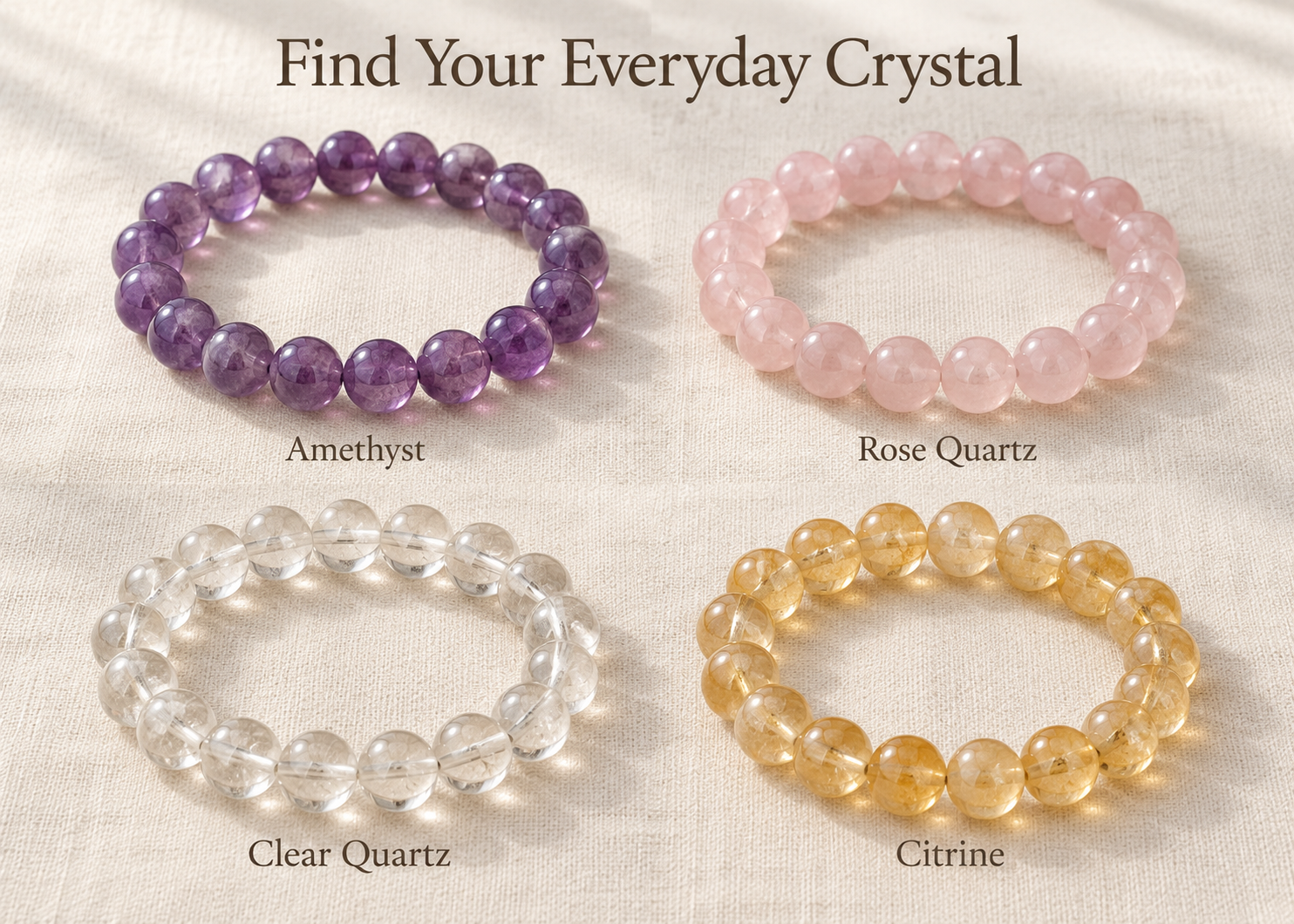
Choose among suitable stones by the appearance you will enjoy repeatedly, then assess the finished bracelet. Amethyst and rose quartz are useful starting points because their jewelry properties are documented and their colors offer distinct styling options. Clear quartz provides a neutral visual option, while citrine suits a warmer palette.
| Stone | Visual character | Choose it when | Daily-wear consideration |
|---|---|---|---|
| Amethyst | Purple, from lighter to deeper shades. | You want a purple accent with neutral clothing. | Mohs 7; protect against knocks, heat, and prolonged intense light. |
| Rose quartz | Soft pink, often with a cloudy appearance. | You prefer a gentle color with cream, gray, or blush outfits. | Mohs 7; its stone properties do not remove the need to check stringing and accents. |
| Clear quartz | Colorless transparency or translucency, with possible inclusions. | You want less color competition with clothes or other jewelry. | Check all accent materials; a mixed bracelet may need more careful maintenance. |
| Citrine | Yellow to warmer golden tones. | You enjoy warm colors and a noticeable jewelry accent. | Mohs 7; compare bead size separately and protect against abrupt temperature changes. |
Color matching is a styling suggestion, not a performance ranking. The GIA care references above support the stated gemstone properties; they do not certify any particular bracelet sold here.
Two bracelets made from the same gemstone can differ substantially in comfort because their dimensions and construction differ.
What Bead Size and Wrist Fit Work Best for Daily Use?
Choose the smallest profile that gives you the appearance you want without interfering with your routine. Smaller beads are worth comparing for desk work; larger beads are worth considering when visual presence is the priority. Neither choice is universally correct, and bead diameter does not establish the finished bracelet’s wrist fit.
Check the largest part of the design
A strand with small base beads can still contain a large focal bead or projecting charm. Ask for the dimensions of those components, particularly if the bracelet must fit under sleeves. Request weight separately if a substantial bracelet feels tiring to you; a photograph cannot answer that question.
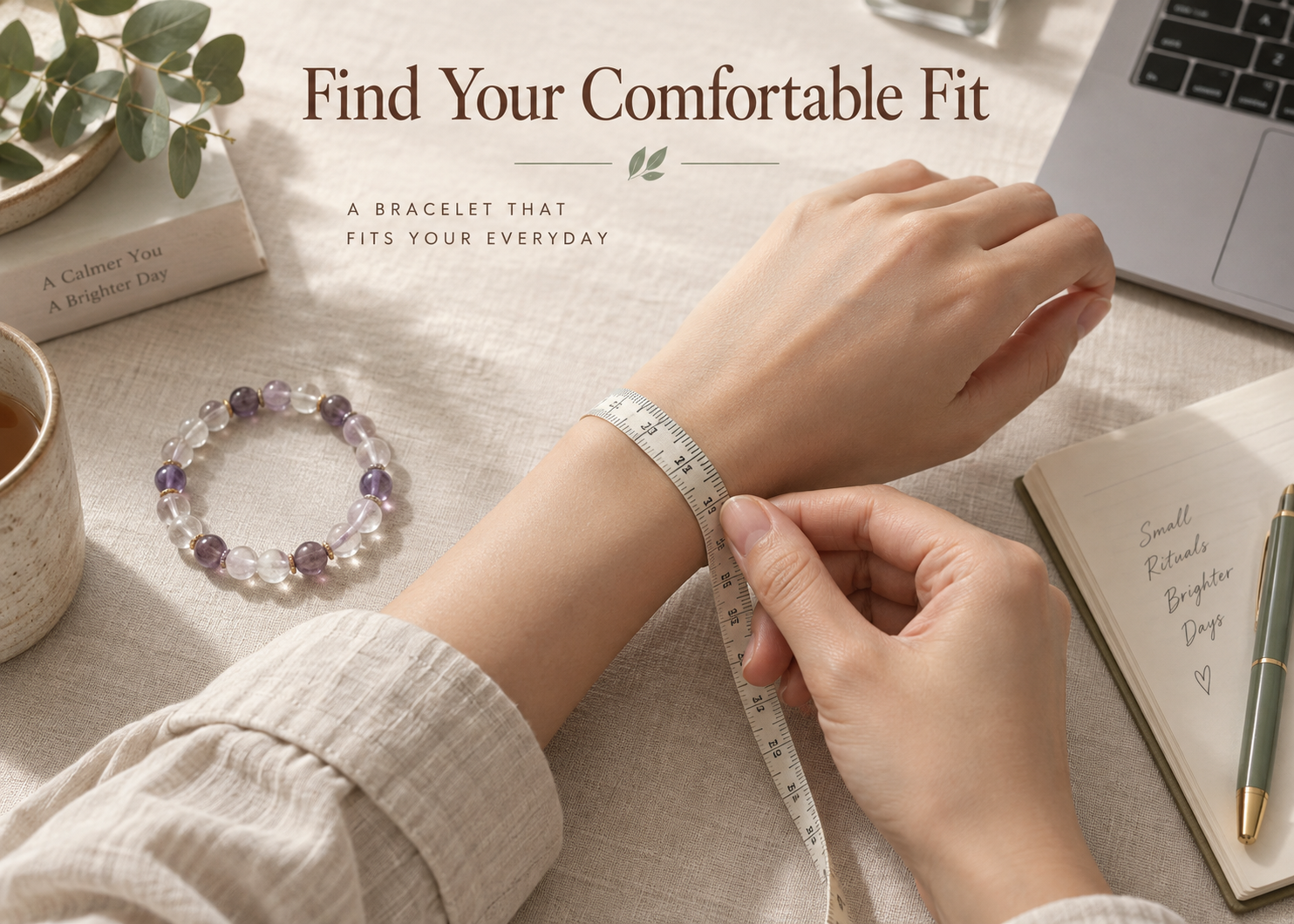
Measure before selecting a size
Measure where you intend to wear the bracelet and tell the seller whether you prefer a closer or looser fit. Ask for the selected version’s internal fit rather than relying on a general men’s or women’s chart. There is no single extra-length allowance that suits every bead shape and construction.
Bead diameter measures the bead; wrist fit describes how the finished bracelet fits the wearer.
Which Construction Details Matter Most?
Inspect the surfaces, holes, stringing, and any hardware that touches your skin or clothing. Daily convenience depends on the whole piece. Before purchase, ask whether it uses elastic, an adjustable cord, or a clasp, and whether the seller offers a repair or restringing option.
- Bead finish: Request close-ups if edges or holes look rough.
- Stringing: Look for fraying, exposed damage, or an unsecured connection.
- Hardware: Confirm metal composition when this matters to you.
- Movement: Consider whether dangling details could catch on cuffs or bags.
- Service: Ask what to do if the cord needs replacement.
Do not assume that a decorative label identifies the material. “Gold-tone” describes appearance, and “shell pearl” should not be silently reinterpreted as a natural or cultured pearl. The Materials & Authenticity Policy explains the brand’s disclosure approach; resolve remaining questions for the exact item.
The care requirements of a mixed-material bracelet depend on every component, not only its main stone.
Which Yiling Taiyishan Designs Are Worth Comparing?
The Clear Quartz & Amethyst Bracelet and the 14mm Citrine Bracelet illustrate two different buying priorities: a smaller base-bead design with accents, and a larger, more prominent bead style. Neither is the automatic winner. Use the listed dimensions to decide what you want to investigate further.
Yiling Taiyishan is a Chinese culture-inspired jewelry and lifestyle brand offering crystal bracelets, incense bead bracelets, Five Elements-inspired designs, crystal decor, and related cultural products.
| Product | Published specifications | Practical interpretation | Confirm before purchase |
|---|---|---|---|
| Clear Quartz & Amethyst Bracelet | Approximately 6mm clear quartz, 10mm deep amethyst, 9mm lavender amethyst, and 5mm shell pearl accents. | A candidate for buyers wanting a smaller base strand with purple focal details. | Actual wrist fit, cord type, shell pearl composition, and care instructions for the complete piece. |
| Citrine Bracelet 14mm | Citrine beads listed at 14mm with a warm yellow appearance. | Consider when larger beads are intentional; assess desk and sleeve clearance first. | Actual wrist fit, total weight, treatments, and stringing. |
The smaller base beads in the first design do not guarantee that its larger accents will feel unobtrusive. Conversely, the larger citrine design may suit someone who already enjoys bold bracelets. These are size-based judgments, not claims of measured comfort.
What Makes an Everyday Bracelet Good Value?
Good value means paying for a design you can evaluate and expect to enjoy wearing. Compare disclosed materials, workmanship, fit, and available support. A higher price alone does not establish better durability, and symbolic language does not substantiate a material premium.
- Check whether photographs show the selected version and a useful sense of scale.
- Ask about treatments or coatings when the listing does not explain them.
- Compare the final checkout total, including delivery and any disclosed charges.
- For gifts, confirm fit and the recipient’s preferred colors before choosing symbolism.
- Read the Shipping Policy and Return & Refund Policy before ordering.
Avoid buying an oversized bracelet solely because it looks impressive in a close-up. For a gift-focused alternative, explore the crystal bracelet gift guide for Mom.
How Should You Care for a Bracelet You Wear Often?
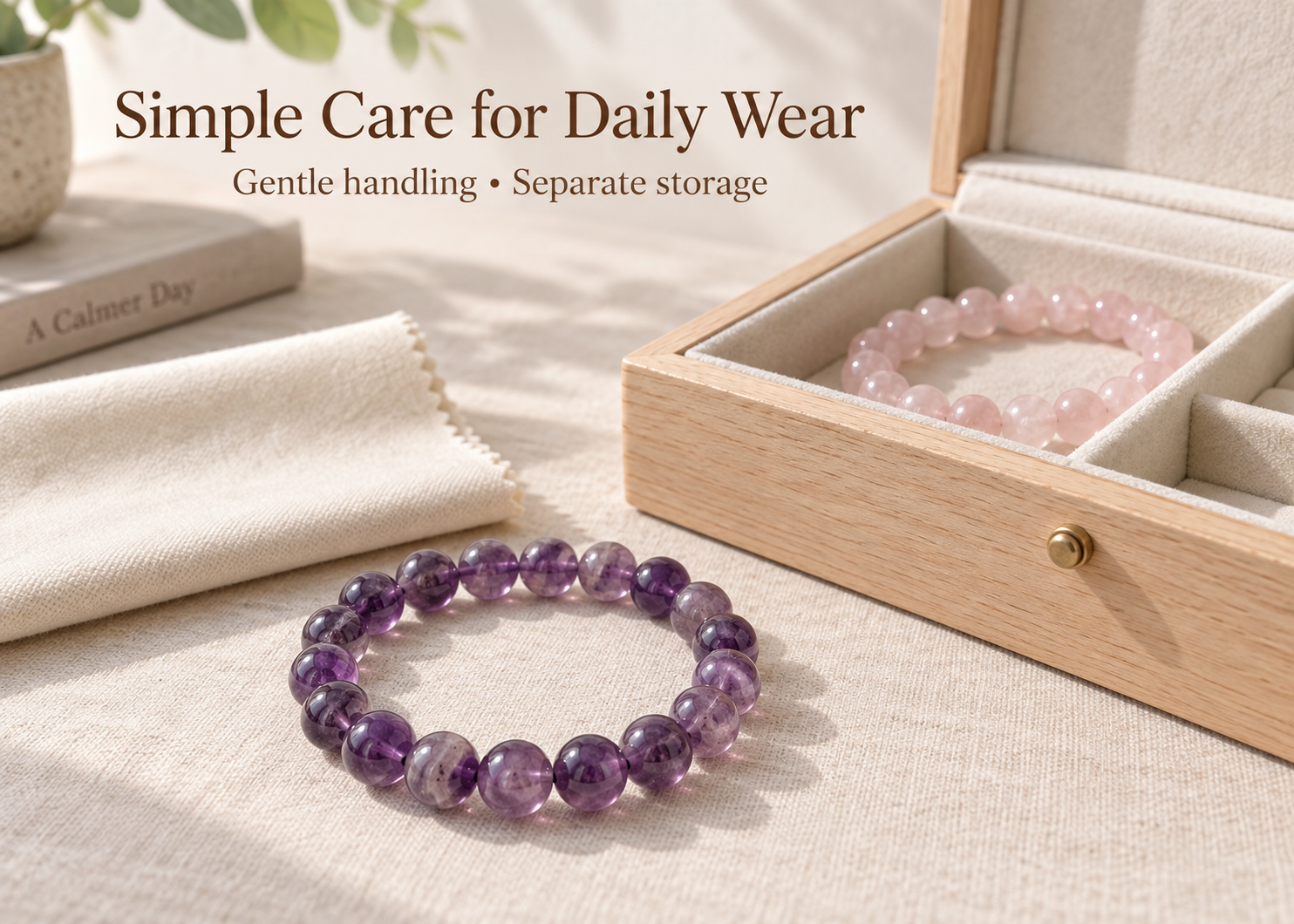
Use the seller’s instructions for the finished bracelet and keep a simple inspection routine. Check the cord and fittings before wearing it, remove the piece for activities involving impact or cleaning chemicals, and store it separately when finished. Everyday wear does not require continuous wear.
GIA’s jewelry care guidance explains why chemicals, treatments, heat, and storage need attention. A cleaning method suitable for a loose gemstone is not automatically suitable for its stringing or decorative components.
For routine surface care, follow the crystal bracelet cleaning guide. Do not assume that water, steam, or an ultrasonic cleaner is appropriate for an unfamiliar mixed bracelet.
Wearing a bracelet every day and wearing it during every activity are different choices.
Frequently Asked Questions
Can I shower or swim with my crystal bracelet?
Remove it unless the maker explicitly confirms that the complete piece is suitable for that exposure. The fact that a stone tolerates a particular cleaning method does not establish that the bracelet’s cord, coatings, or fittings tolerate repeated bathing or swimming. Build removal into your routine before entering the water. If you want jewelry you never remove, ask for documented guidance for that exact design before buying.
Is an elastic bracelet better than a clasp bracelet?
Neither construction is automatically better for everyone. Elastic can be convenient to put on, while a clasp may suit someone who prefers that fastening method. Compare how easily you can use it, how it fits, and what repair options exist. Ask the seller to identify the construction rather than guessing from photographs. If you already own a bracelet you find comfortable, use its fastening style as a starting reference.
Can I wear a crystal bracelet beside my watch?
You can consider that arrangement if both pieces sit comfortably and do not repeatedly collide or rub. Test wrist movement and typing position before committing to a large-bead design. Wearing the bracelet on the other wrist is another practical option. Think about the watch’s case, strap, and the bracelet’s projecting details together; matching colors does not guarantee that the two accessories will be comfortable side by side.
Does natural crystal mean untreated or indestructible?
No. Natural origin does not, by itself, establish treatment status or resistance to damage. Ask the seller to identify the stone and disclose relevant treatments, coatings, or assembled components. Also distinguish internal visual features from surface damage that needs clarification. Photographs can show appearance, but they cannot settle every identification question. If a particular origin or treatment claim drives the price, ask what evidence supports that claim.
Do I need to choose a crystal according to its meaning?
No. Color, comfort, and care requirements are sufficient reasons to choose a bracelet. If you enjoy symbolism, treat it as an optional personal or cultural layer. The guide What Bracelet Should I Wear? explores that broader approach. A symbolic theme does not change a stone’s physical properties or guarantee health, financial, relationship, or spiritual outcomes. There is no need to purchase a design whose appearance or fit you dislike.
Is a smaller bracelet always the best gift for everyday wear?
No. A smaller profile can be a useful option to consider, but the recipient may prefer substantial jewelry. Find out what they already wear, measure a suitable bracelet if possible, and confirm the new item’s fit. Keep the gift receipt and check return conditions before customizing it. A familiar color and comfortable construction are more useful clues than assumptions based on the recipient’s gender or age.
Cultural & Product Disclaimer
This article is for cultural education, lifestyle reference, personal reflection, and product understanding. Crystal symbolism is not medical or financial advice and does not promise a spiritual, relationship, or life outcome. Crystals are not treatments or tools guaranteed to change real-world results. Product examples rely on published descriptions rather than independent testing. Confirm current specifications, care instructions, availability, and purchase terms before ordering.


Pingback: Where to Buy a Chinese Five Elements Bracelet Online
Pingback: How to Choose a Crystal Bracelet for Men: Buying Guide